Hiking and Halacha 2

IMG_9248 IMG_9281 IMG_9307 IMG_9279 IMG_9298 IMG_9302 IMG_9251 IMG_9267


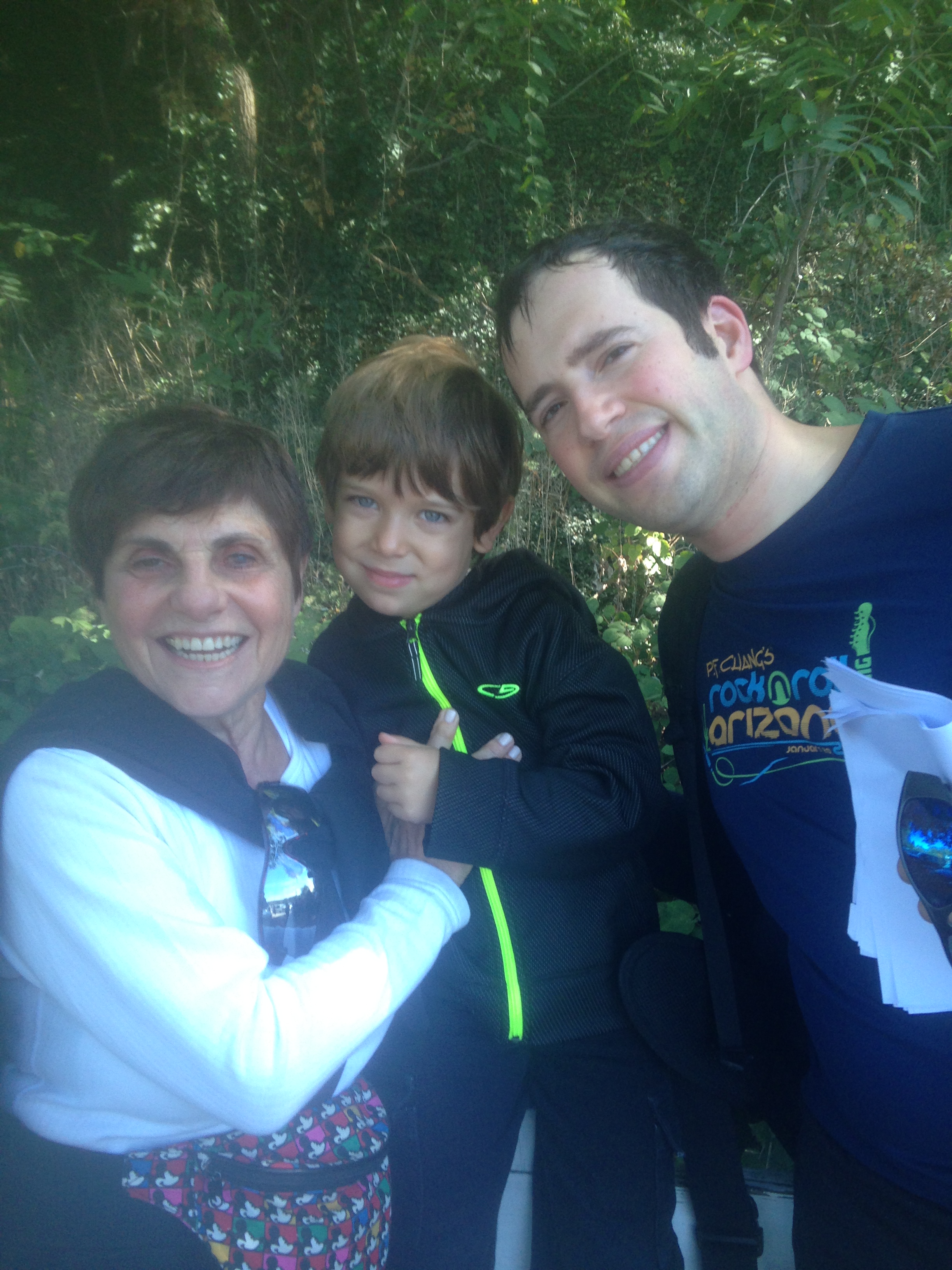
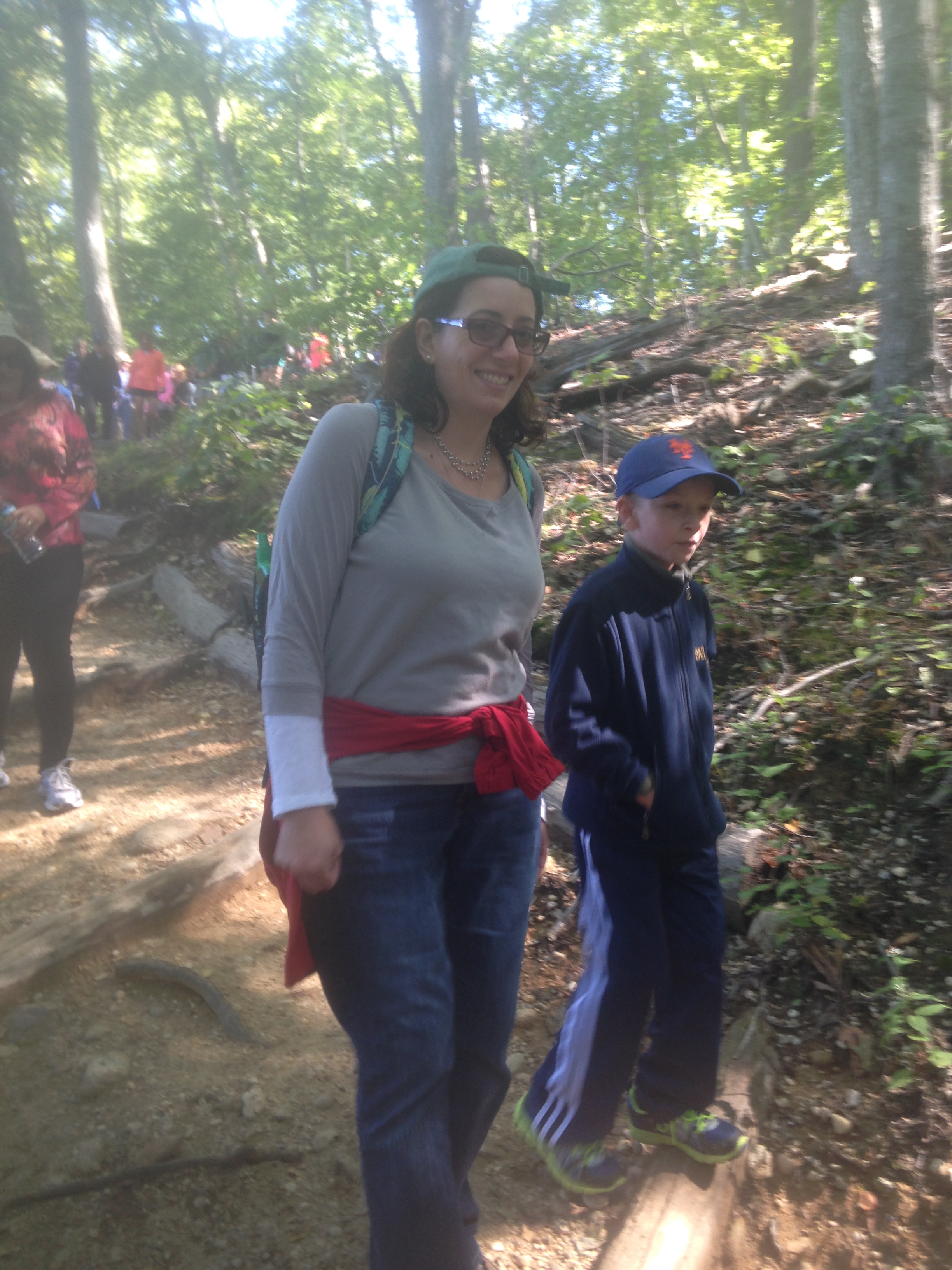
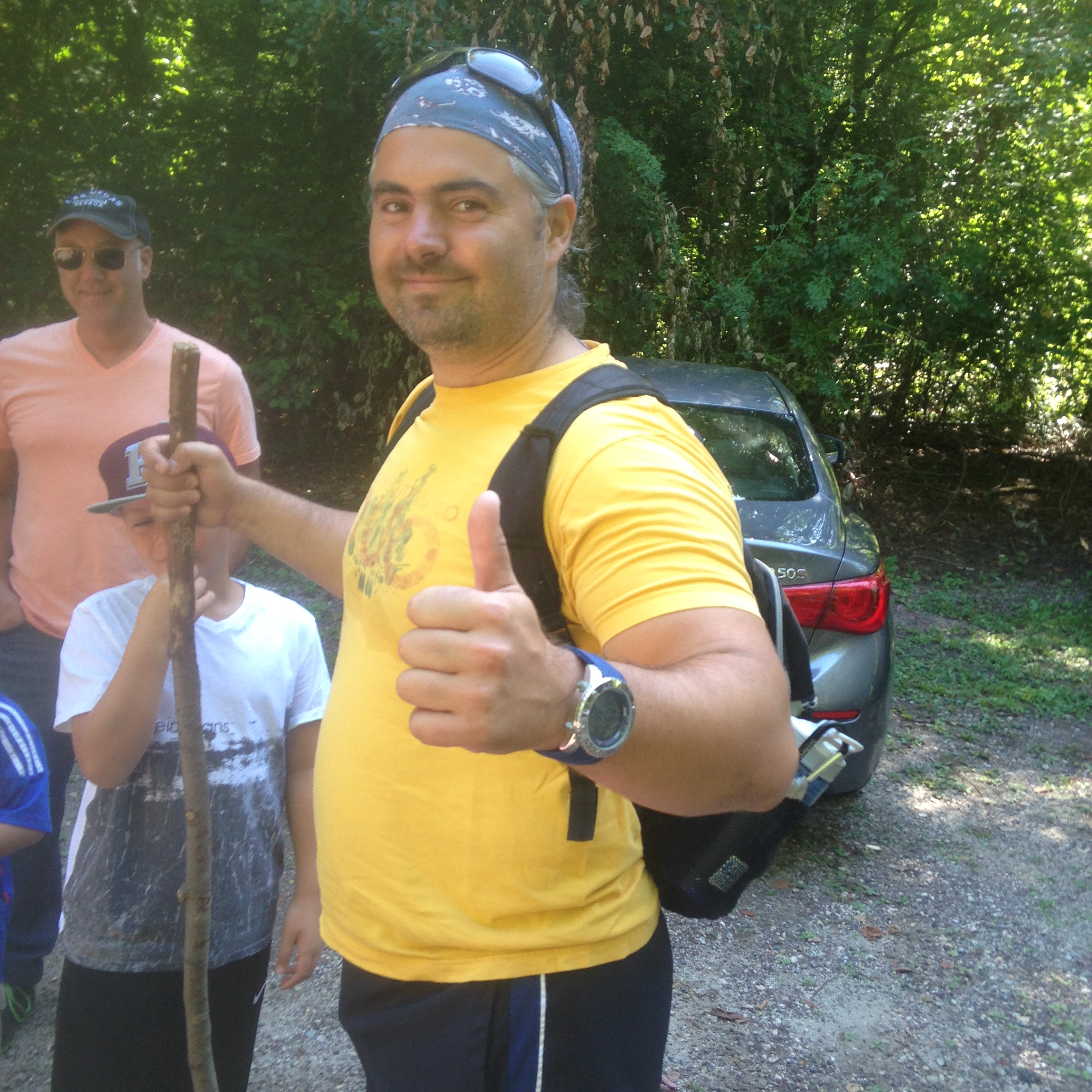
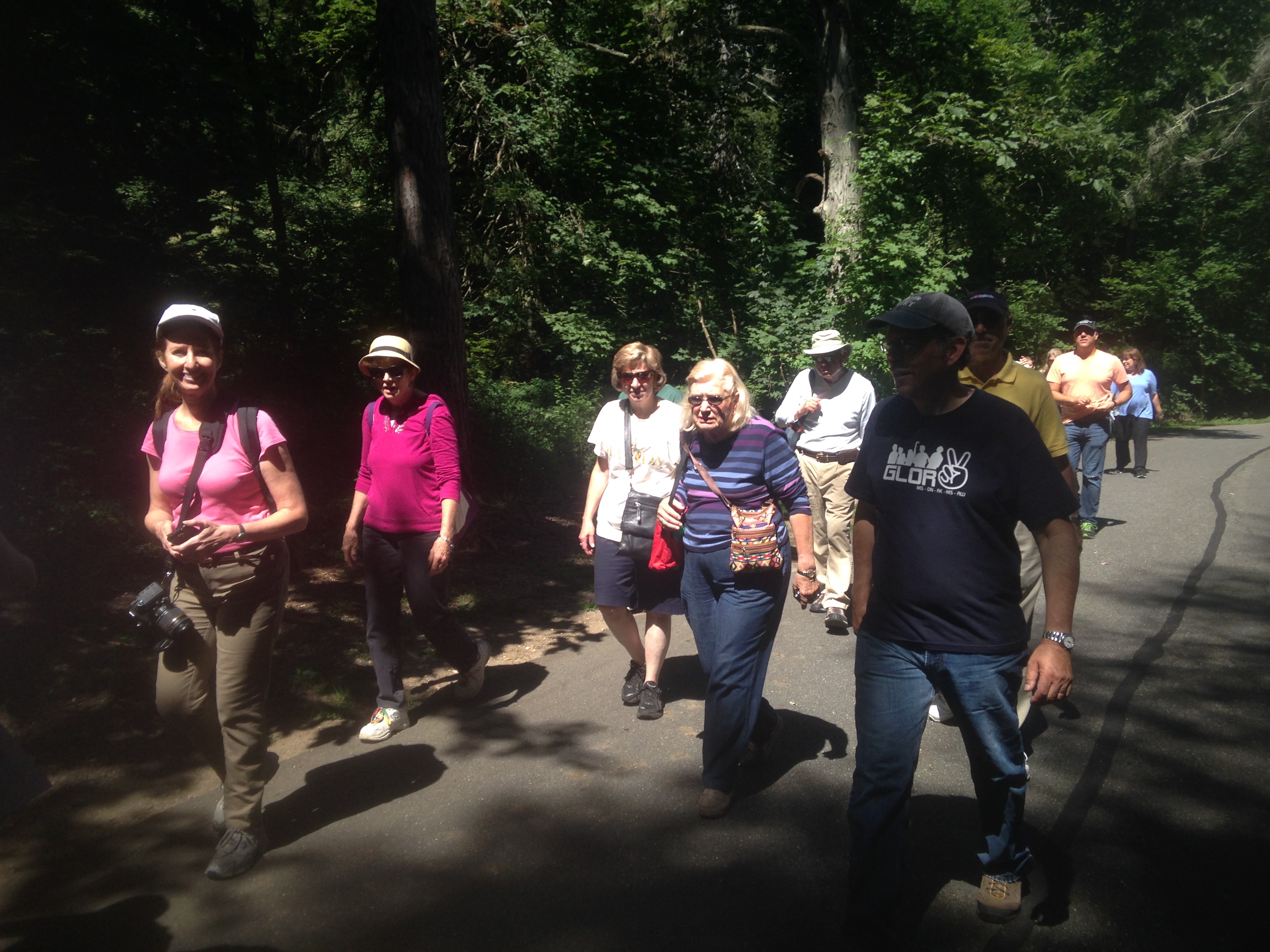
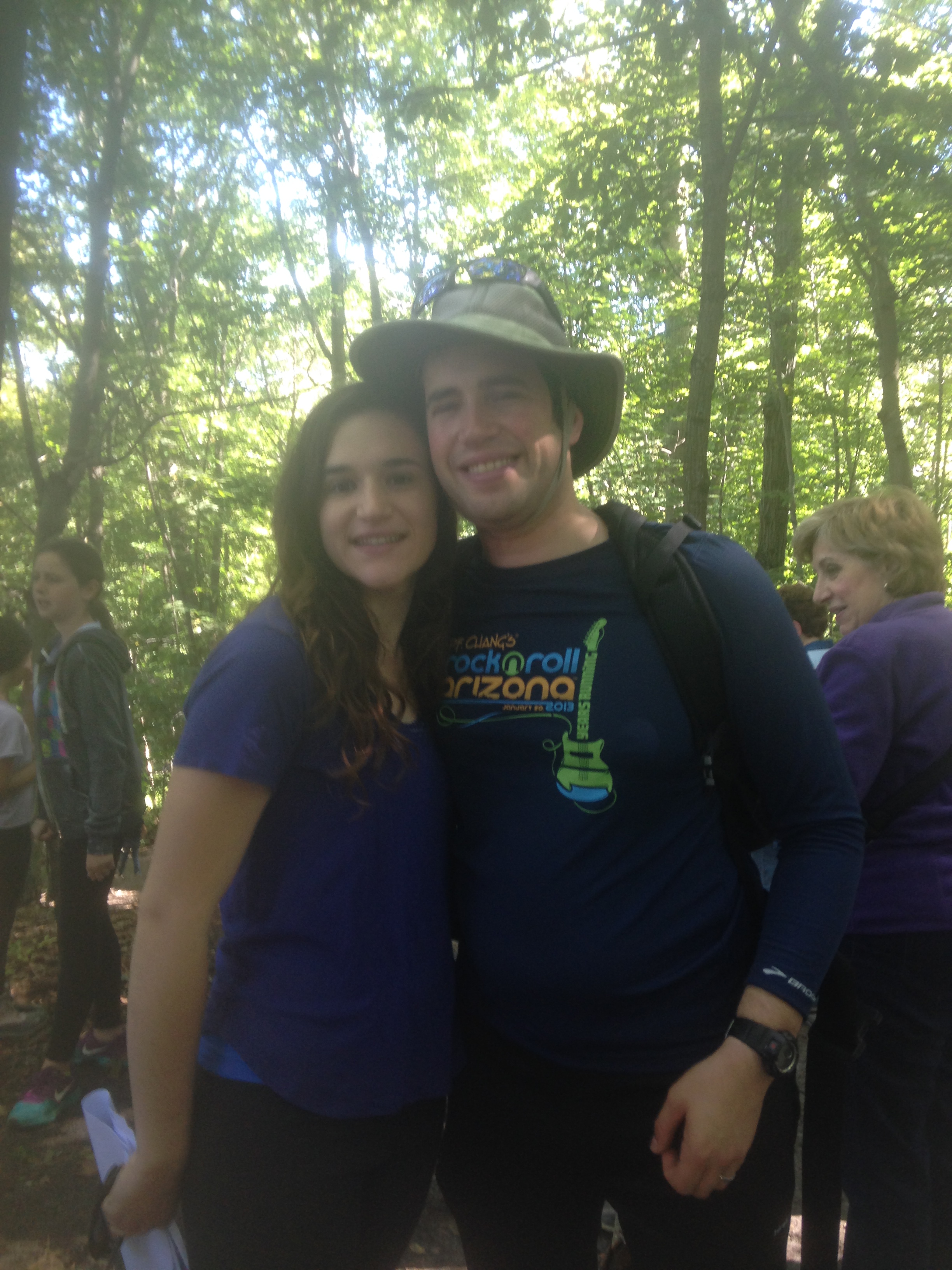
25 congregants of various ages at the Jericho Jewish Center went on an advanced hike to Cold Spring Harbor, the start of the Greenbelt Trail which goes from Northern to Southern Long Island. This is known as the most challenging hike on Long Island, and everyone did great with the challenging uphills and slopes! We had a short teaching on blessings said over plants, herbs and fruit-including the blessing said upon smelling the etrog! There was a consensus from the group to do another hike when the leaves change in the fall, so we will try to do one after the holidays.

Now off to Waldbaums for our Apples and Honey Tasting. Busy weekend here at the Jericho Jewish Center!

Friday Night Live

At Jericho Jewish Center, we had our first Friday Night Live service, featuring piano played by Flo Baumonel and Religious School student Ben Rosner. The energy and enthusiasm shown by the 100+ participants and the feel-good nature of the service was wonderful to be a part of, in addition to the spirited singing of Cantor Barry Black and Samantha Eller. It was a great kick-off to the Religious School year and really made Shabbat come to life for our congregation.

Services began after sunset, so I do not have any pictures from the event. However, I will provide pictures of our Hiking and Halacha and Apples and Honey Tasting, both of which will occur tomorrow.

An outstanding facet of the Friday evening was that we had two services: a traditional one at 6:45 pm and our Friday Night Live at 7:45 pm. This reflects the “Tradition and Change” motto of the Conservative Movement. Some went to both services to support both, which was touching to see. We also had a festive Shabbat dinner before the Friday Night Live service sponsored by !jake’s Mens Club.

We will continue Friday Night Live throughout the year, next doing it on Friday November 14. Our goal is to provide additional options for congregants who are not engaged by our traditional offerings. Each service will be varied, so as not to become predictable, yet will have the same goal of providing an engaging, positive experience for all who attend. Through services such as this, we will bring Shabbat to life.

God as Our Rock and Our Redeemer

When I officiated at an unveiling a couple weeks ago, I thought about the tradition of placing a small rock on the gravestone of a loved one. There are numerous interpretations for this, but one strongly resonates for me. It is that the rock that we place on the gravestone is connected to a name for God-Tzur, or rock. God is referred to as our rock and our redeemer, a permanent source of comfort upon whom we can rely and who will always be there for us. Similarly, a stone is a permanent marking-not one that will decompose or fade over time. Consequently, placing a rock it is a permanent mark that we were present at the grave of a love one.

A related interpretation comes from Rabbi Simcha Weintraub, who was our Scholar in Residence at Congregation Anshei Israel in Tucson. Rabbi Weintraub writes “The Hebrew word for ‘pebble’ is tz’ror – and it happens that this Hebrew word also means ‘bond.’ When we pray the memorial El Maleh Rahamim prayer (and at other times) we ask that the deceased be ‘bound up in the bond of life’ – Tz’ror haHayyim.  By placing the stone, we show that we have been there, and that the individual’s memory continues to live on in and through us.”

It goes along the lines of a quotation I learned from my Rabbi Emeritus in Tucson: “If you continue to love the one you lose, you will never lose the one you love.” There will always be a permanent connection-one marked by a rock that is left on the gravestone.


Celebration of New Life

Today I was privileged to officiate at my first baby naming. Unlike a Brit Milah for a baby boy, a baby naming for a girl can be done at any time. Traditionally it is done the first time we read Torah after the birth, with the father (and in egalitarian communities also the mother) getting an aliyah to the Torah and receiving a special blessing featuring the name. However, more and more people are doing special Simhat Bat ceremonies one month or more after the birth, where the baby girl is brought in, given a name and then celebrated. Some people do a ceremony with water, as water is traditionally a symbol of life. Others do ceremonies with candles, as the new girl brings light into the world. The ceremony that we did featured special readings done by the parents, grandparents and great-grandparents, welcoming this new addition to their family into the world.

I love the fact that new traditions have developed in how to meaningfully do a naming for a baby girl and enter her into the covenant of the Jewish people. This enables the family to have flexibility in choosing a ceremony that is most meaningful for them to celebrate this life-cycle event. As every family is different, there is no cookie-cutter approach as to how to celebrate new life.

After the ceremony we gave the girl a onesy which says I Was Named at the Jericho Jewish Center. It was a touching moment to a beautiful event.

Baruch Dayan HaEmet

When someone we know dies (actually when we hear any bad news), we are commanded to say “Baruch Dayan HaEmet,” Blessed be the Judge of Truth. Why do we say this? Rather than saying words of anger, frustration or resentment, though we might feel them, we acknowledge what is a basic truth: our life on earth is for a finite amount of time. We further acknowledge this in the words we say after kriah, the tearing of the garment or ribbon prior to the funeral: “G-d has given and G-d has taken, blessed be the name of G-d.” As hard as it is, death is a reminder that we are mortal beings who came from the dust of the earth and will return to the dust of the earth.

I had a reminder of this today when I was e-mailed by a former congregant in Tucson that Reverend Nachman Berkowitz z”l had passed away. Reverend Berkowitz grew up extremely poor in Russia and was able to put shoes on his feet through becoming a Torah reader. During World War II, he was sent to the gulag, and miraculously persevered through the hardships of the Russian labor camps. He said that what gave him the strength to keep going was the Torah, and in the camps he often said to himself huge sections of the Torah which he had memorized. After the war he came to the United States where he served as Torah Reader of two congregations: one in Toledo and the other in Tucson. 

Reverend Berkowitz always read Torah with true yirat shamayim (fear of G-d) and with all his heart. It was truly a beautiful thing to hear him read, and extremely inspiring. I especially remember hearing the love with which he read Megillah all 3 of my years in Tucson. Reverend Berkowitz also was a sofer and was the first person to check my tefillan and to attach new r’tzuot (straps).

The best part about Reverend Berkowitz was, though he knew so much Torah, Jewish law and tradition (more than I will ever know) he was humble and understanding. He would have a conversation with anyone about any aspect of Judaism, not as the scholar that he was but as a regular guy.

Nachman-you are missed. I know that, in the words of Micah, you are walking humbly with G-d. Baruch Dayan HaEmet.
ISIS and Iran: One Eye on Each

Yesterday I went to Temple Beth Sholom in Roslyn Heights to hear Congressman Steve Israel speak about his recent trip to Israel. It was a great experience for me, both to return to the synagogue I worked at in 2009-10 and to meet my Congressman, whose daughter worked for me at Congregation Anshei Israel in Tucson. Small world!

One aspect of the evening that struck me was a question as to ISIS being a threat to Israel’s security. The Congressman’s response (if I remember correctly) was “ISIS is a threat to Israel. Iran is an existential threat to Israel. I don’t want to just put my eyes on ISIS and take them off Iran.” 

This astute point by Congressman Israel demonstrated to me the danger of missing the forest for the trees. It is very easy to turn both eyes on ISIS’s massacring thousands of people and beheading of American journalists, both of which constitute terrible war crimes and atrocities. One eye always needs to be on toppling the Islamic State-for if we do not do so it will destroy all the values that we hold dear. NO ONE should be killed for being a member of a different religion. At the same time, the other eye must constantly be focused on Iran and its attempt to develop an atomic bomb, which could wipe out an entire people. We cannot lose sight of Iran’s developments in this regard because if we do NO ONE will be safe. 

Congressman Israel reminds us to focus on the issue of today (ISIS) but not at the expense of forsaking the issue of the development of a nuclear weapon in Iran.

I am sorry to miss the AIPAC Rabbinic Summit today but have the AIPAC Policy Conference on my calendar. Hope to see you there.

Cease Fire?

With Tuesday’s indefinite cease fire between Israel and Hamas, questions range as to how long the cease fire will last and what the impact of it will be. Both sides feel that they won the war, yet I believe that unfortunately, like in all wars, neither side did. Until Israel is safe from rocket attacks, the battles are far from over. It is because of this that our congregation continues to say Psalm 121 every day at the end of morning minyan (though I have thought about discontinuing it if the cease fire continues after Rosh Hashanah).

I view Hamas as having the same goals and the same agenda as ISIS and Al Queida and that as long as Israel is threatened, no western country is safe. This was highlighted to me in this morning’s Newsday which indicated that 12,000 individuals, many of them westerners, have flown to Syria to be trained by and join radical Muslim groups. These individuals can fly back to their country of origin at any time undetected (if they are not known to be affiliated with said group) and carry out a terror attack. The article ended with a quotation from a Florida man who flew to Syria to join the Islamic State’s army. He said “You think you are safe? You are not safe. We are coming for you, mark my words.” With extremists like this, what good does a cease fire do? Let us pray for the moderate Muslim leaders (who Rabbi Arthur Schneier wrote about in this week’s The Jewish Week) to come forward and usher in a reign of peace rather than one of terror.

Hiking and Halacha

IMG_9127 IMG_9132 IMG_9180 IMG_9133 IMG_9173

Jericho Jewish Center had 40 participants in our inaugural Hiking and Halacha at Muttontown Preserve. We hiked a heavily forrested path and had fun being in nature together. I did a short teaching on Berachot Nehanin, some of the blessings that we say over seeing natural wonders, and then we said the Sheheheyanu for our being together on a hike for the first time. I am planning to offer a more advanced hike in mid-September. See you on the trail!

Standing Up for One’s Values in the Hamptons

IMG_9120

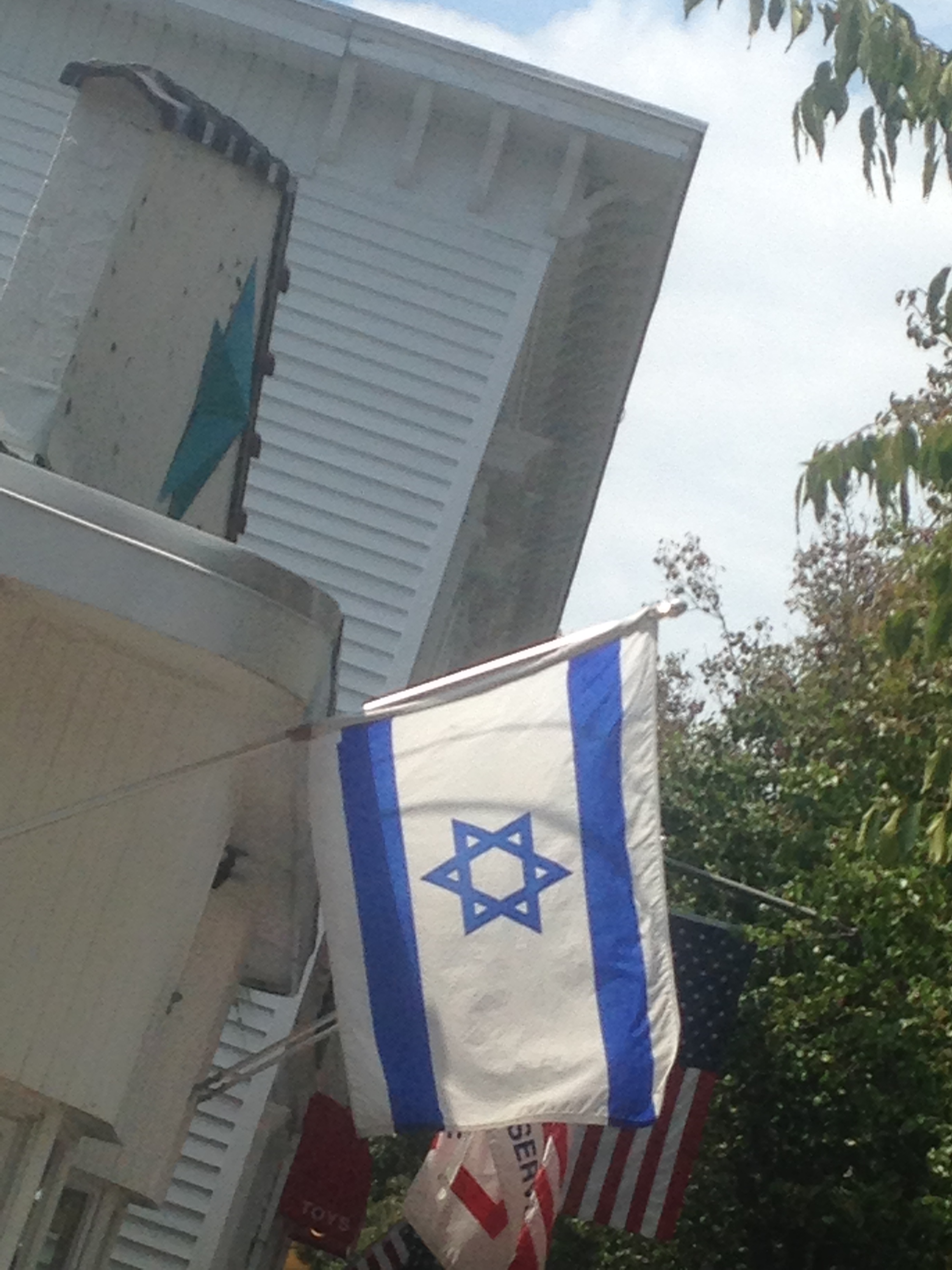
Karina and I went away to the Hamptons for a couple days before the “High Holiday Rush.” We saw a number of wonderful sites, including the Montauk Point Lighthouse. One of the most interesting to me, however, was seeing an Israeli flag on a store in Westhampton called Shock. Naturally we had to go investigate. We found out that the owner of 3 of the stores (including a womens clothing store and an ice cream shop) is Jewish. We also read a newspaper article posted outside one of her stores that spoke about the commotion caused by her putting up a 6 foot tall waffle cone outside her ice cream shop. For more about that incident, please read here

http://nypost.com/2014/05/04/westhampton-beach-spent-18k-fighting-merchant-over-ice-cream-cone-statue/

http://www.newsday.com/long-island/towns/westhampton-beach-ice-cream-cone-spurs-legal-headache-1.5648800

Since these articles, the ice cream cone has been moved inside the shop.

My favorite quotation (from the second article) is that the owner sometimes pushes the line promoting her business. Pushing the line (or “chutzpah”) is often thought of as a bad thing, being against the politically correct norms of society. However, I would argue that in some cases it is good. Putting a 6 foot tall ice cream cone definitely promotes ones business. Similarly, putting an Israeli flag outside ones store sends a clear message about where one stands. Chabad’s Chanukah mobile and mobile Sukkah indicate to the community the importance of being proud of who we are as a people and not being afraid to flaunt that to the world. In addition, pushing for an eruv (as recently passed in Westhampton) sends a similarly strong message about standing up for what is important to us. What is perceived as “chutzpah” to one could very well be standing up for one’s values to others.

Next time you hear the term “chuzpah” or “pushing the line” think of some of the positive connotations the term can connote.

Welcoming Experiences (Shabbat On the Beach)

IMG_8986IMG_8965IMG_8982IMG_8987

This Shabbat was incredible! We had 120 people at our inaugural Shabbat on the Beach. We were in a natural setting and used our voices and instruments (marakas and tambourines) to give us a spirit of Shabbat. All ages were represented, from 1 to 96. Cantor Black joined me in leading a spiritual and memorable prayer service. We danced to Ki Hem Hayenu and joined together to the words of Debbie Friedman’s V’Ahavta. We said a mi sheberakh for those who returned from camp and a prayer to wish well those who are headed off to college. Afterwards congregants joined together in a picnic dinner. It was my proudest day as a rabbi because it brought our entire community together.

What made this event successful in my opinion is that we had an abbreviated service with plentiful English readings and short, catchy Hebrew tunes. There was a very low entrance threshold as well as much spirit and enthusiasm. Yet we are not content to stop at Shabbat on the Beach. We are next going to do a Friday Night Live on September 12 featuring musical instruments played by religious school students. The service will be abbreviated like Shabbat On the Beach but it will have a slightly different flavor, so as not to be predictable. G-d willing it will continue to leave people wanting more.

Our goal is not the program per say but creating a welcoming, positive experiences that lead into one another. It’s not a revolutionary concept but one that is being done by emerging synagogues: meeting people where they are at and having services, programs and engagement opportunities that respond to their interests. As I learned from a Cantor in Tucson, the key is to prepare the environment and make it conducive for success, making sure that people have positive experiences. It is working well so far, and G-d willing will continue to shape the future of the new Jericho Jewish Center. By providing new engagement experiences while concurrently maintaining traditional prayer services, we are soaring to new heights.

I’ll see you next on the trail for Hiking and Halacha on Sunday August 24!