The Importance and Power of Water

During a summer in rabbinical school I was doing a social justice fellowship with the Jewish Council on Urban Affairs. One day after a long week of work, I turned on the water and left it on a few minutes before planning to take a relaxing shower. My housemate admonished me, stating, “Ben, water is not an infinite resource!”

There is so much power in water. According to the Torah, water existed even before the creation of light![1] The Torah speaks of מים חיים, the water of life.[2] The rabbis metaphorically compare water to Torah, asserting “there is no water without Torah.”[3]One cannot live long without water; similarly, our lives become desiccated and empty without study of Torah and transposing that study into meaningful action. The Talmud asserts that just as water is free to all so too is Torah free to all.[4]

Water is central to Jewish ritual. Before we eat bread, we wash our hands and say the blessing al netilat yadayim. We purify ourselves with water-look at the Mikveh. Water represents new beginnings and rebirth, just as we celebrate a new Jewish year today.

Another biblical covenant, marriage, is often created through well encounters. When I got engaged, my mother-in-law gave me the book Meeting at the Well (show) about biblical betrothal being connected to wells. The servant who found Rebecca as a wife for Isaac knew she was the right woman because he gave water not only for him but also for each of his camels.[5] Jacob saw Rachel when she was waiting for water and in a brute act of strength he lifted off the cover of a well that normally would have taken all the shepherds combined. He then proceeded to water Laban’s flock.[6] Moses saw Tziporah and her six sisters driven away by shepherds; he in turn chased away the shepherds and watered Yitro’s flock.[7] While not an act of betrothal, we know of the prophetess Miriam’s power in finding water for the Israelites to drink throughout their journey in the desert.

Our tradition verifies the importance of water and the damage too little or too much can cause. When we pray for rain at the end of Sukkot, we say “for blessing and not for curse; for life and not for death; for abundance and not for famine.”[8] Water is foundational to our people’s narrative. It was prediction of drought and famine that led Joseph to become a high level official in Egypt.[9]  The drought and famine in Egypt caused Jacob to send his sons to Egypt for obtaining wheat.[10] This led to settling in Egypt and the entire exodus story.[11]   

In modern times, it can be easy to take water for granted. We open our taps and expect water to instantly come out, not worrying about our taps running dry. Yet in our great state, we know not to take this for granted. Remember the megadrought of 2019-22 and the restrictions it brought-including not being allowed to water our lawns more than 3 days a week, with more restrictive regulations in the city and in Roseville.[12] That’s solely on the residential level; water has a much greater aspect on the state level. California produces 50 percent of the countries’ vegetables and 75-80 percent of the nation’s fruits and nuts.[13]  We have a number of growers in our congregation-not a surprise, as agriculture is a $60 billion industry in our state.[14] A shortage of rain can be economically disastrous and lead to wildfires in the dry season; a surplus can lead to flooding.

As the years go by, it becomes harder to ignore our dependence on water as human beings. This summer, Lake Mead and Lake Powell, the largest and second-largest reservoirs in the United States, hit their lowest water levels since they were formed 90 years ago.[15] States are being required to cut back on their use of water from the Colorado River.[16]

Water dependence is a worldwide issue. According to the World Health Organization, 1 in 4 people in the world lack access to clean, managed drinking water.[17] Lest we think that this is only a third-world problem, we see boiled water notices in the United States, often because of main breaks.[18] We have also seen industrial runoff impacting water in numerous places, with carcinogens on the rise.[19]

Last week, we were reminded of water’s potency. Israel went through a water crisis as a microalgae bloom knocked out 5 of Israel’s 6 desalinization plants, leaving only the one in Hadera.[20] Thankfully, household taps continued to run, but southern farmers were not so fortunate, with their taps closed for a few days.[21]

In addition, we the impact of water as a weapon. Look at the end of July where Iran allegedly hacked into water systems in over a dozen states-among them Minnesota, Missouri, South Dakota, Michigan, New Jersey and Georgia.[22] Thankfully they were able to be manually overridden, and the water was not contaminated. Water lines are often amongst the first thing attacked by enemies. In Qusra last month, two Palestinian families were blockaded by Jewish terrorists, and their water line was cut off, with the goal of forcing them out of their homes.[23]

         Lest we think that water is only a problem, we should look at a section of yesterday’s Torah portion that is often glossed over. The Sixth Aliyah contains a covenantal pact between Abraham and Avimelech where Abraham gives Abimelech sheep and oxen.[24]Then in the Seventh Aliyah, Abraham gave Abimelech 7 ewes as proof that he dug a well. The two of them swore an oath, leading the founding of Be’er Sheva, which means well-of-7 or well-of-the-oath.[25]

         What is forgotten about is that Abimelech was a Philistine king. One chapter earlier, Abraham entered his kingdom of Gerar. There, for the second time, he had Sarah pretend to be his sister instead of his wife, fearing that if Abimelech found out she was his wife he would kill Abraham. God appeared to Abimelech in a dream saying, “You will die because of the woman you have taken; moreover, she is a married woman.”[26] There is dialogue between Abimelech and God after which Abimelech implores Abraham “What have you done to us? How have I sinned against you that you brought upon me and my kingdom such great sin? Deeds that out not be done you have done to me! What did you see that you did such a thing?”[27] Abraham and Abimelech did not start out on the right foot, yet one chapter later they make a covenant with one another. They were able to move from fear to trust. Abimelech and Abraham did not resolve their disagreements, but they agreed that the basic necessities of life apply to both their peoples.

There is opportunity to build upon the covenant between Abraham and Abimelech as well as from all the covenants which brought two people together. Look at the Arava Institute in the Negev which has been bringing atmospheric water generators to Gaza to provide clean drinking water.[28] Twenty-three days after October 7th, the Arava Institute issued the following statement: 

Water is a central element of the war between Israel and Hamas in the Gaza Strip. Israel controls several water pipelines entering Gaza, much as it controls most of life there. But water can also be a source of hope for an alternative future.

The Middle East is an arid region that is highly vulnerable to the effects of climate change. There is an essential need for solutions that offer equitable access to water and sanitation, and that protect Israel and the Palestinian territories’ shared water resources.

Our experience has shown us that working together creates understanding and friendships that defy the ongoing conflict.

We are not naïve. We recognize that water is central to the struggle between Israelis and Palestinians. Yet, as we see it, continuing to weaponize water will not make peace more likely. What it will do is amplify the suffering that is already taking place.[29]

         It is very easy to see the suffering in other parts of the world. Because the Islamic Republic of Iran focus on destroying Israel, they haven’t spent money on water resources, and they are reaching “water bankruptcy.”[30] In contrast, the 1994 peace agreement with Jordan obligates Israel to supply Jordan with approximately 75 million cubic meters per year, while providing mechanisms for mutual assistance in drought years. Both sides established a Joint Water Committee to manage the resource, monitor water quality, and collaborate on new supplies. It is called the Israeli-Jordanian Water Cooperation.[31]

         If Israel can find a way to make peace with Jordan around water, a peace which has held for 32 years, then we must also find a way to create a sacred covenant around water, where a sufficiency mindset rather than a scarcity one will rule the day. It requires dreaming of a world where we will be able to say יש לי כל-I have everything that I need.[32]These same words were said by our ancestor Jacob (also known as Israel) to his brother Esau. Like Abraham and Abimelech, Israel and Jordan, we can agree to cooperate over the limited resource that is clean water and that water is needed as a basic necessity of life. I charge each and every one of us to also be more cognizant of how much water we use and recognize that it is a finite resource that must be safeguarded and protected. May we take steps to do so in 5787.


[1] Genesis 1:2 has רוח אלקים מרחפת על-פני המים, whereas light is not created until Genesis 1:3.

[2] Genesis 26:19, Leviticus 15:13

[3] Babylonian Talmud Bava Kamma 82a

[4] Based off Pirkei Avot 6:2

[5] Genesis 24

[6] Genesis 28:10

[7] Genesis 2:16-18

[8] Tefillat Geshem

[9] Genesis 41:34-36

[10] Genesis 42:1-3

[11] With appreciation to Baryohay Davidoff for remining me of this important insight

[12] Yes, You Can Water Your Lawn. But Here are the Restrictions for Sacramento Area, So Far – Water News Network – Our Region’s Trusted Water Leader

[13] CDFA – Statistics

[14] How Much Food Does California Produce for the World? – Chef’s Resource

[15] https://www.earthdata.nasa.gov/news/worldview-image-archive/low-water-levels-lake-powell-lake-mead-august-2026

[16] This is largely because growing communities in the southwest, especially with the rapid growth of Maricopa County which houses Phoenix, use of the water from the Colorado River has become a premium. Lower basin states (California, Nevada and Arizona) have to cut their water use from the river by 20 percent over the next 2 years while upper basin states (Colorado, Utah, New Mexico, Wyoming) have no mandatory cuts but are encouraged to voluntary cut back 200k acre feet. Learned from NPR Marketplace podcast 8-25-26.

[18] U.S. Boil Water Notice Tracker 2026 : Live Advisories by State – Clean Air and Water

[19] Water contaminants and cancer risk: arsenic, disinfection byproducts, and nitrate – NCI

[20] https://www.cnn.com/2026/09/04/climate/microalgae-bloom-israel-water-deasalination-shutdown

[21] Ark News Daily Podcast September 3, 2026.

[22] https://www.cbsnews.com/news/more-states-water-systems-cyberattacks-iran-backed-hackers/

[23] https://www.nbcnews.com/world/israel/scenes-israeli-settlers-siege-palestinian-homes-west-bank-rcna592078

[24] Genesis 21:27

[25] Genesis 21:29-31

[26] Genesis 20:3

[27] Genesis 20:9-10

[28] https://arava.org/bringing-new-atmospheric-water-generators-to-gaza/

[29] https://theconversation.com/collaborative-water-management-can-be-a-building-block-for-peace-between-israelis-and-palestinians-216250

[30] https://e360.yale.edu/features/iran-water-drought-dams-qanats

[31] Israel-Jordan Water Cooperation: From Historic Treaties to Today’s Fragile Partnership – Finacc Water

[32] Genesis 33:11
Israel Trip Blog Day 4: What Next?

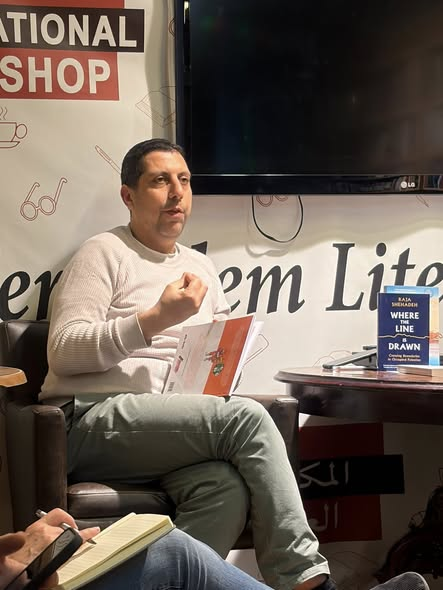
Our last day of the trip began by visiting a Palestinian Education Bookshop in East Jerusalem. Out of all the Palestinian speakers, Mahmoud Muna best spoke my language. He began by talking about the fragmentation of 5 different types of Palestinians: Inside Israel, East Jerusalem, West Bank, Gaza and Palestinian Disapora. Of the first 4, each has a different ID card issues by Israel, and there are different license plates as well. What made Mahmoud compelling is he talked about the heinous, unacceptable and scary nature of October 7 (Khaled on Day 2 went even further by saying he understood Israel needing to respond for weeks or even a couple months, just not for 2.5 years). Mahmoud also said one need not use the academic jargon (occupation, apartheid, ethnic cleansing, genocide) but then one must find another term to describe what happened. Mahmoud and his nephew Ahmed were arrested by Israeli police but after finding no crime against them they were released. I bought two books from Mahmoud: Daybreak in Gaza from Gazan writers after October 7 and Life Under Occupation by a Spanish journalist who travelled throughout the West Bank and Gaza. It’s important to hear others’ narratives and stories even when one disagrees with the facts or things which are being conveyed.

We returned to the hotel and heard from Tal Becker, who indicated that one can basically know nothing for certain (i.e. did Israel deliberately cause famine in Gaza? To get an answer one needs access to the Israeli Cabinets’ wartime remarks). Tal’s words were very emotional: that he had come up with a plan to kill/martyr his children should Hamas reach his house. Tal’s main theory was that western, liberal values were viewed as the solution to all of Israel’s problems, just as Adam thought Eve, his Ezer K’negdo, was the answer to all his problems. Romantic love/romanticization looks for simple solutions; being in the therapy room is where you work things out in all their complexity.

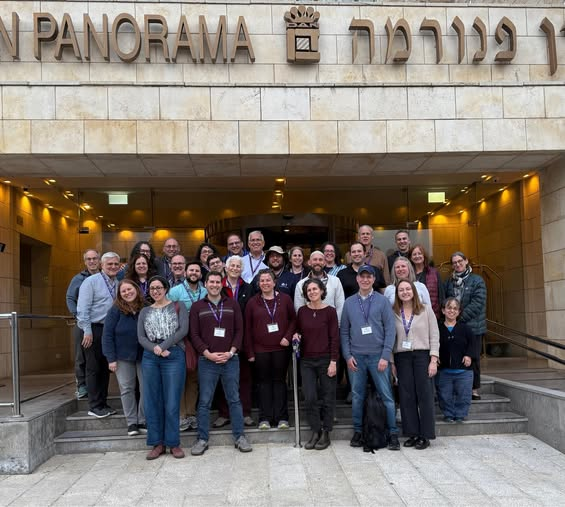
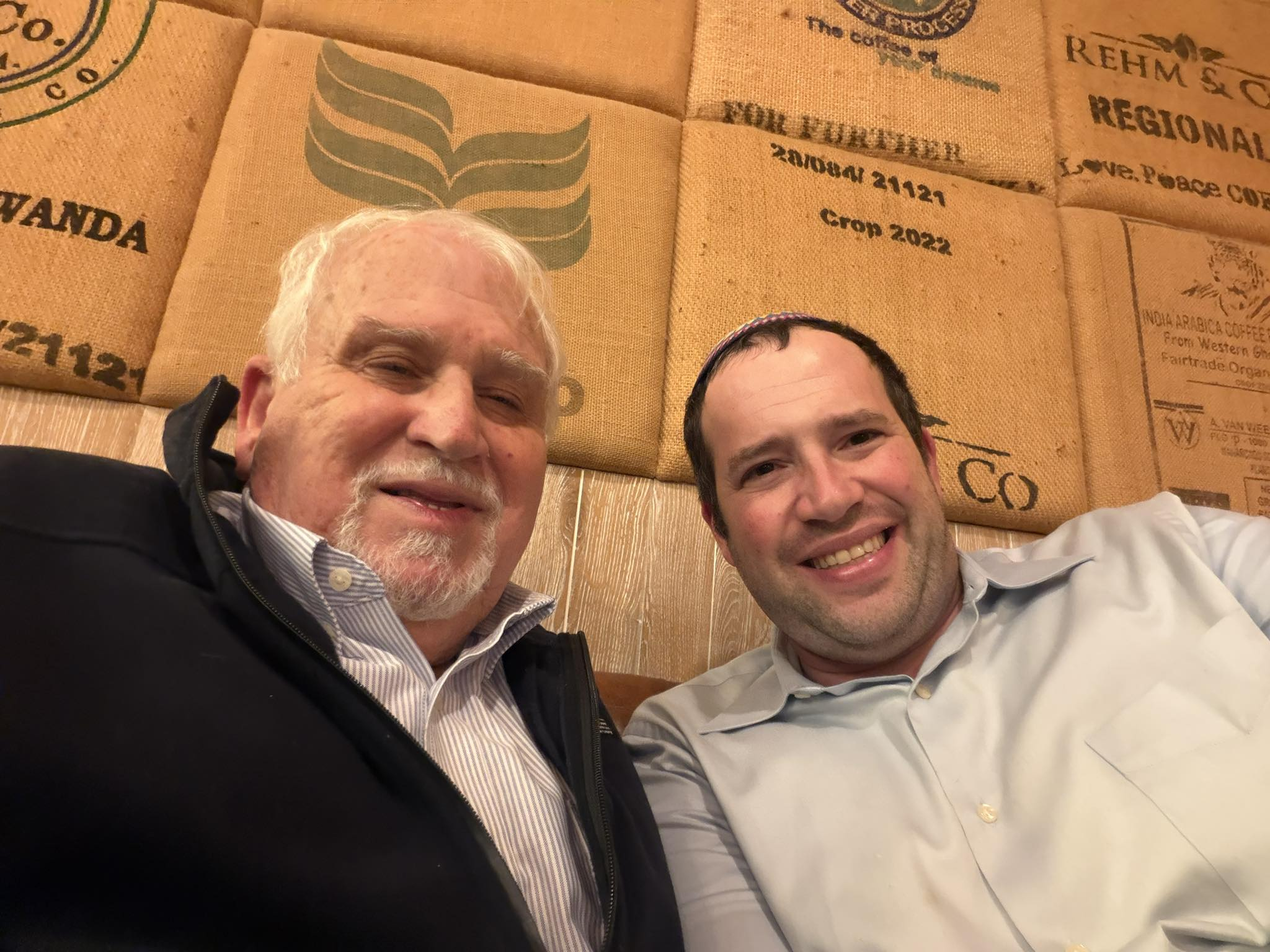
We had small groups throughout the 4 days to process what we heard and how we will bring this information to our home communities (which I am still working on). Here is our group picture from the end of the trip.

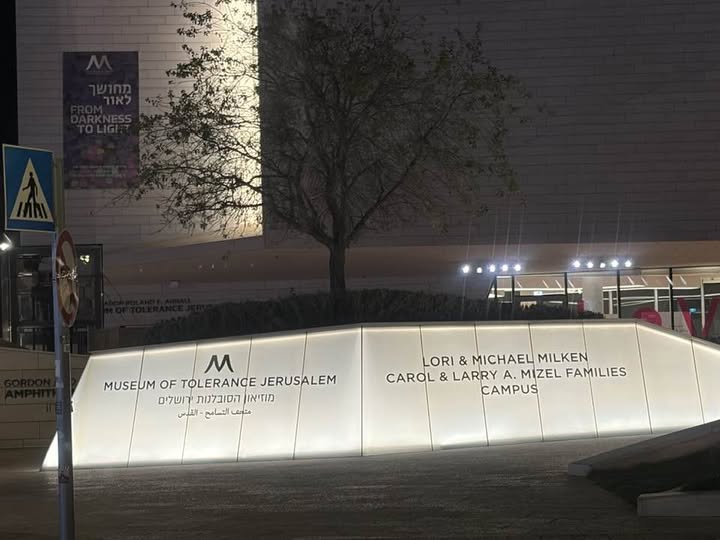
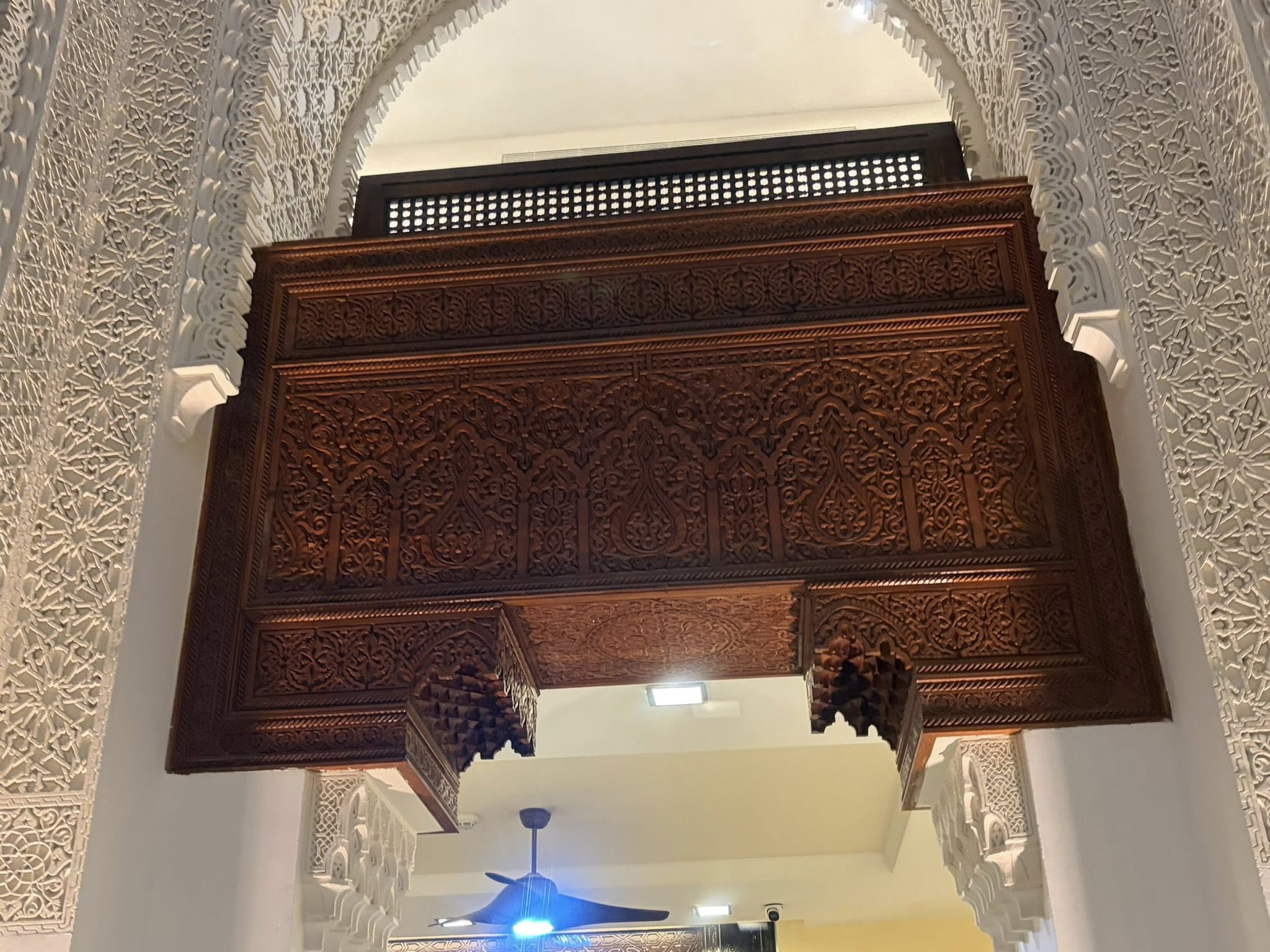
My last few hours were spent frantically shopping and exploring the Shuk, Ben Yehuda and Nahalat Sheva. On my way back to the hotel I ran by this relatively new museum, which I hope to see during a future trip.

Thank you for reading. I am open to discussing my adventures with any of you in the coming weeks.

Israel Trip Blog Day 3: Neutral Ground/No Man’s Land

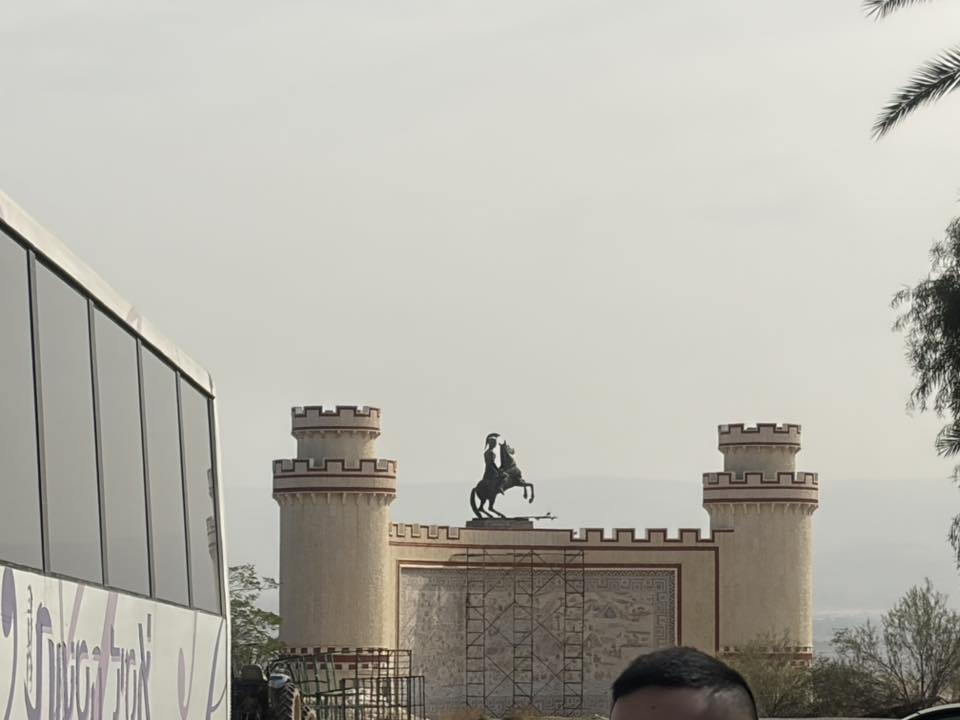
On the third day of the trip we had to meet on neutral ground: a Greek Orthodox monastery outside Jericho. The Palestinians we met with could not get visas to enter Israel, and it was not viewed as safe for us to meet in an Area A city like Jericho (to find out more about Areas A, B and C please look up the Oslo Accords). The monastery grounds were beautiful.

We met with a Palestinian social scientist who shared with us that the younger generation of Palestinians are more progressive and pragmatic than their parents. 2/3 of them want either a civil and democratic state or a secular state as opposed to a religious state under Sharia law. Unfortunately over 50 percent of them are unemployed, a statistic that goes up to 85 percent in Gaza, and the average job is only 3,000 shekels (approx. $1000) a month.

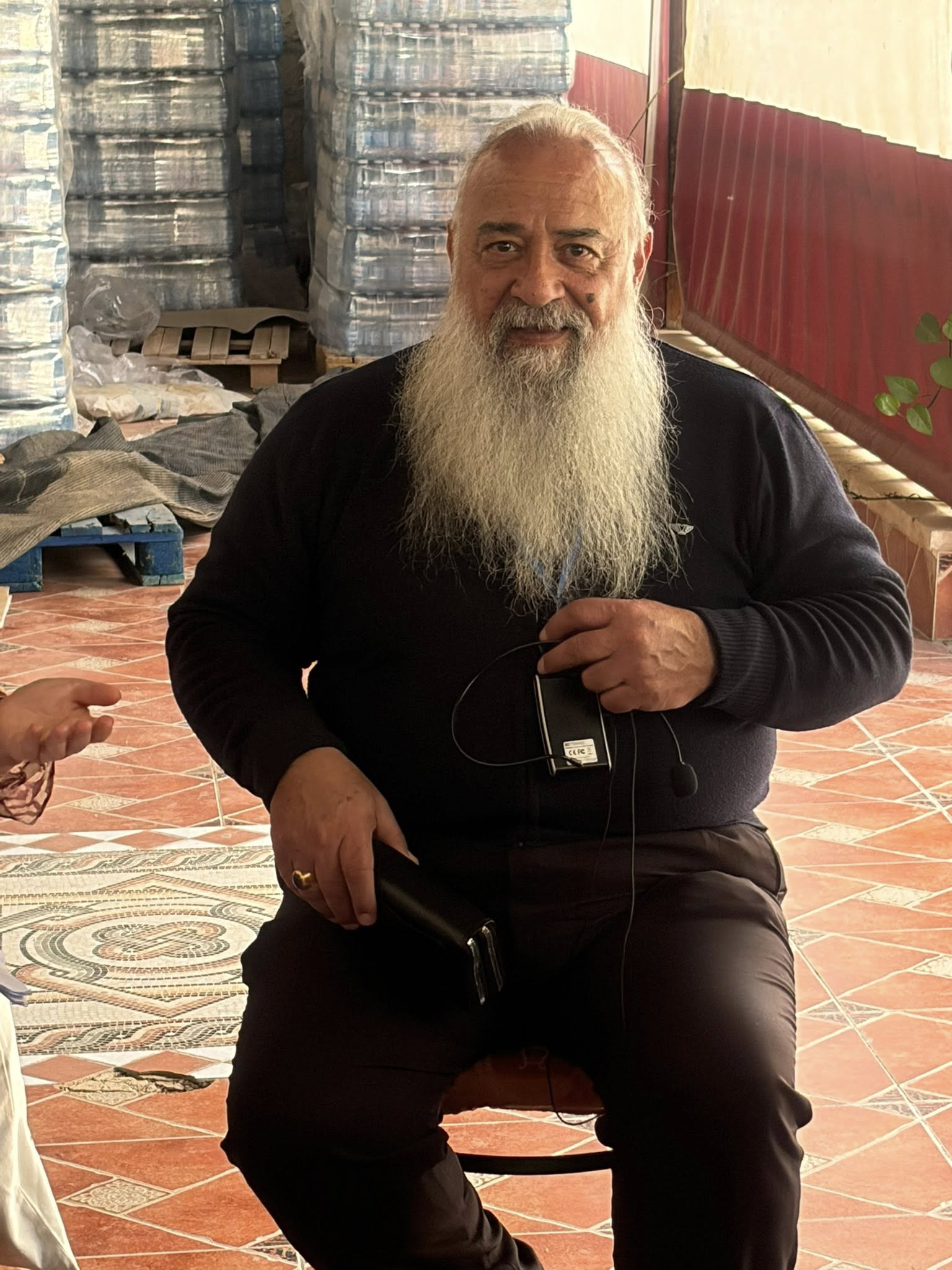
We then met with Father Jack, a Greek Catholic priest in Taybe, the sole remaining Christian city in the West Bank. Father Jack talked about the hilltop youth coming through disrupting the olive harvest, their taking over sheep populations and displacing Palestinian farmers and their burning Taybe. With these disruptions, Taybe cannot harvest their olives, their main source of income. He said “As a Christian I don’t have enemies; my enemy is the policy, not the human being.”

Next we went to the American Colony in East Jerusalem. We met with Sundus El-Khot, the first Palestinian to qualify for the Jerusalem municipal government. As a Jerusalem Palestinian, Sundus is a resident; she cannot vote in Knesset elections but she can in municipal ones, and she rallied Palestinians, amidst difficulties, to help support her. Most Jewish and Muslim politicans did not-the former felt she was better with the Arab List or they would put her so low on their list that she’d be an “Arab ornament”; the latter felt why bother with these elections. Sundus’ main line was “I just want to live peacefully, respectfully and with dignity-I’m not a politician.”

I missed part of a session to meet up with former Mosaic Law Rabbi Yossie Goldman, who gave me a copy of his new book Just Do It!

At the end of the day we went to Feel Beit Cafe on the Seam Line (the line of separation between West and East Jerusalem in 1947-48 before the Green Line was established in 1949). The Cafe is a joint venture between Israelis and Palestinians. We heard from the founders and saw a show there.

Israel Trip Blog: Day 1 Beginning the Journey

I I am on a rabbinical assembly trip with Encounter. I last was with Encounter as a rabbinical school student in Israel, spending 2 days in Bethlehem and staying with a Palestinian family. 

This trip is different as it began in West Jerusalem with Israelis. After speaking about the goals of the trip, we went to the Center for North African Jewry.

We heard from Israelis from three different walks of life: one of whom was a founder of Smoli Emunah (the halachic left), another was a speaker for Hartman and the Tikvah Fund and a third

is the director of the Israel Center of the San Francisco Jewish Federation, Barak Lozoon. In addition to sharing their stories, these 3 shared how their perspectives have changed since October 7.

Next we heard from a woman from Efrat and Rabbi Benny Lau from Jerusalem

about their experiences working with encounter-and how they balance being a major general and having 6 children in the Israeli army respectively and their reaching out to Palestinians. 

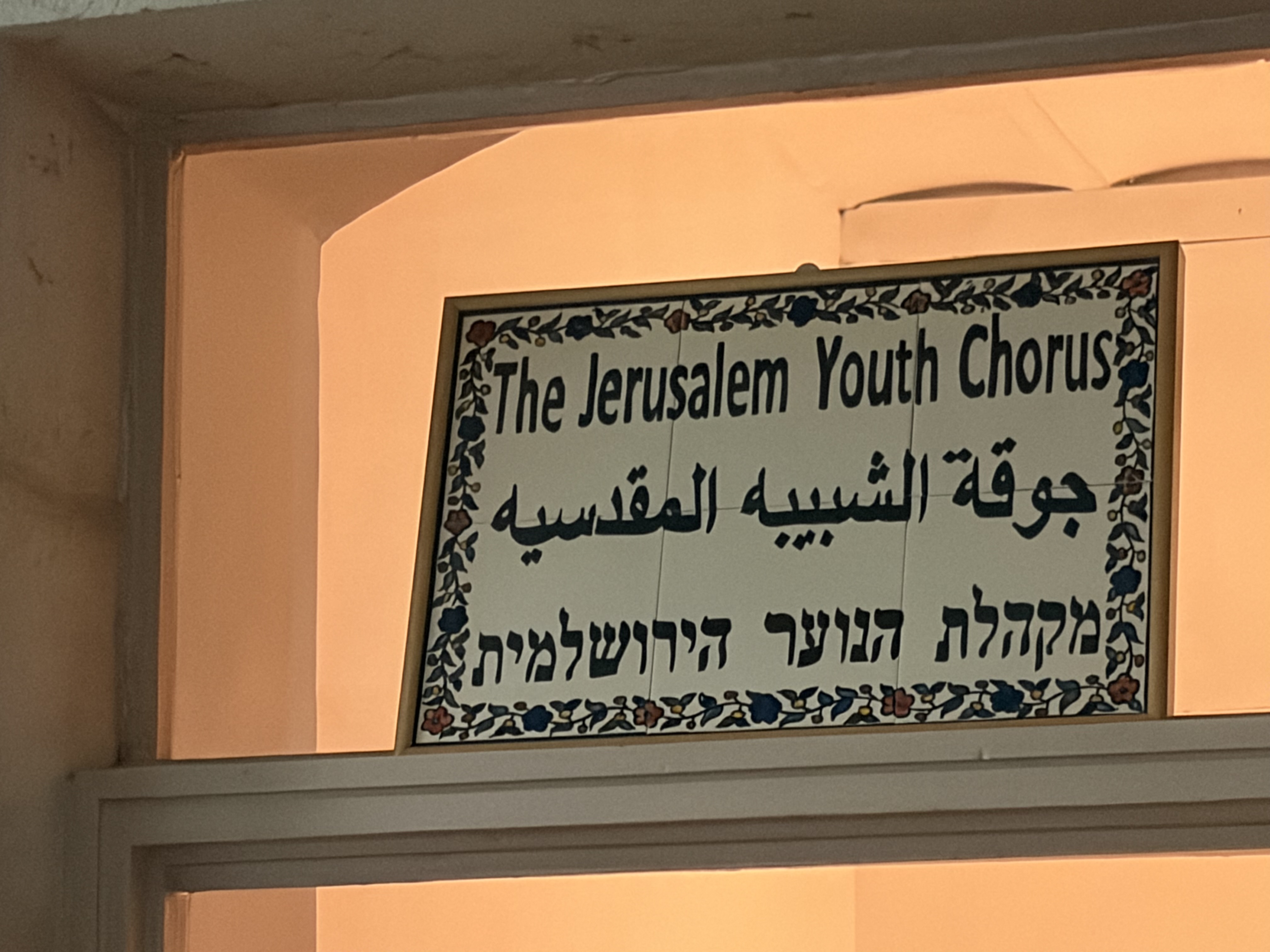
Finally we heard personal stories and a beautiful concert from the Jerusalem Youth Chorus

a group of Israeli and Palestinian students working together to express themselves through music. Out of respect for the participants, who have been attacked by BDS, we did not photograph them.

There are many questions, not all of which will be answered.

Tomorrow we will be headed to the Gush Etzion area

The Use of Power

I’m going to speak about Israel in part of a larger context. If it makes you uncomfortable, I’m going to ask you to please stay in the room. I am going to devote this coming Shabbat morning after services to an opportunity to listen to those who want to respond to my remarks-though there is on Kiddush lunch on that date.

The High Holy Days are the time more than any other when we think about why we are here and what is the value of our life. The words of our daily liturgy, מה אנחנו מה חיינו, “Who are we? What is our life?” take on greater relevance during this time of the year. It is also a time when we reflect on the power and agency that we do have. What do we have control over and what should we let go of?

How we use the power that we do have is a key lesson, both for us as individuals and for us as a people. Throughout so much of our history, Jews have been powerless. Our people were in exile, at the mercy of every despotic ruler that we encountered. Now, thanks to Israel and to its relationship with the United States, Jews have power to an extent that our ancestors couldn’t dream of. As the psalmist says, – את שיבת ציון היינו  כחולמים the redemption of Zion was as if we were dreaming.”[1]

This past spring, we saw the power that Israel has. The leader of Hezbollah, Hassan Nasrallah, may his memory be obliterated, tried to evade Israel by going low-tech with pagers. Little did he know that the pagers he bought from the Taiwanese company Gold Apollo were manufactured by the Israeli shell company in Hungary BAC Consulting and were laced with the explosive PETN (pentaerythritol tetranitrate). As we saw, Israel sent a page causing Hezbollah leadership to hold up their pagers which detonated after a few seconds. A few days later, at the funeral of 4 Hezbollah members, Israel detonated Hezbollah’s walkie-talkies. With Hezbollah’s top leadership indisposed, Israel was able to invade Lebanon and launch more attacks, eventually killing Nasrallah.

Let us also not forget Israel bombing Iranian nuclear sites on June 12 in Operation Rising Lion. Israel quickly rendered inoperable many of Iran’s missile launchers and its missiles. Around the same time, there was Operation Red Wedding, which took out Iranian senior commanders. Without commanders, Iran was impotent and did not fire any missiles at Israel for 18 hours.[2] The icing on the cake was when the United States joined 9 days later, dropping MOP (massive ordinance penetrator) bunker busting bombs in Operation Midnight Hammer. How did this happen? Israeli agents in Iran had visited every workshop and factory that were later attacked, enabling Israel to target every aspect of the industry that supported the manufacturing the missiles.[3] The success of such a plan was far from an accident; rather it was the culmination of years of work by the Mossad to target Iran’s nuclear program.[4]

Could our ancestors in exile imagine a Jewish country with this type of power?! Could they even conceive that a Jewish country would be a regional superpower, stealthily using its incredible intelligence to make a plan over years which did not leak?! I doubt Yehudah Halevi, who lived during the Golden Age of Spain under both Muslim and Christian rule; Don Isaac Abravanel, who was a courtier to Ferdinand and Isabella and eventually exiled from Spain and Portugal; or even a Maimonides, who before becoming physician to the Egyptian sultan most certainly had to flee Spain from the Almohads, could have fathomed this.  Yet you do not need me to preach about Israel’s power. What we need to consider is what does Israel do with the power that it has and concurrently what do we do with the power that we have.

Former Israeli Prime Minister Levi Eshkol famously referred to Israel as “Shimshon der nebecher,” Samson the weakling. Israel is so strong like Samson, the superpower of the Middle East. Yet Israel also can feel like a nebecher, completely powerless to the task at hand. Israel has endured trauma, especially in the aftermath of October 7th. One merely needs to look at footage from October 7th or the video of a gaunt Evyatar David digging his own grave. While Israel has had much success assassinating Hamas’ top leadership and destroying much of the terrorist infrastructure in Gaza, there remain feelings of ineptitude, failure and lack of moral clarity, with hostages not returned and so much destruction. My question, which only Israelis can answer, is what should Israel do with the power it has?

Israel can use its power as it did in March through May to not allow any food into Gaza and to attempt to take control of the food distribution away from Hamas, who steals food from the aid trucks. Many of us believed when Israel refused food into Gaza that this might be worth it if it led to the end of the war and the return of hostages. Looking back, some of us continue to hold those opinions of the Israeli government. Others are re-thinking after seeing hunger among Gazans and hearing of people walking miles to the food distribution sites, some of whom were shot upon approaching. Every hungry child, no matter where he or she lives, is a human tragedy. As Proverbs teaches us, “If your enemy is hungry, give him food to eat; if she is thirsty, give her water to drink.”[5] This is not to dismiss the PR war going on. We saw the New York Times fell into Hamas’ trap by featuring a starving child who was actually dying from cystic fibrosis. Yet there remain weekly protests in Israel to get a deal to return the hostages and end the war.

I want to take this lesson and apply it not only to Israel but to our lives here in the United States. Many of us are traumatized, having seen pictures and videos of dead Israelis and gaunt hostages or having relatives going up for the 5th time to serve in the IDF, some of whom are not sure why they’re going. Many of us are scared by the rise of antisemitism on college campuses, as the film October 8 demonstrated, which I will speak about on Shemini Atzeret. There is much to be afraid of. What we need to remember is that we are vulnerable, we are human but we are not powerless. We have agency over our actions. As Victor Frankl z”l taught, “Between stimulus and response there is a space. In that space lies the freedom and power to choose our response. In our response lies our growth and freedom.”[6]

 In terms of how Judaism teaches us how to use our power, we don’t need to look far in our tradition. The Ethics of the Fathers, in Hebrew Pirkei Avot, teaches איזהו גבור הכובש את יצרו “Who is mighty? One who conquers his or her inclination.”[7] In his commentary on Pirkei Avot, Rabbi Dr. Joshua Kulp writes, “This one statement may sum up 2000 years of Jewish experience. The Jewish ideal of strength and might is not the same as the Greek ideal, which is that of the mighty warrior and champion athlete. A person of great physical strength who performs amazing deeds is not necessarily mighty. The most difficult thing to conquer is not others or even great armies, but our own inclination to do wrong things. One who has control over this inclination is truly mighty. This is why for thousands of years Jews did not look to soldiers as their heroes, but to rabbis and other thinkers. Strength in Judaism is one of character and not one of might. After all the strongest person in the world is no stronger than a weak gorilla or bear. It is only through our ability to curb our appetites and control our instincts that human beings can differ themselves from animals.”[8]

A story: when Adam was encountering and naming the animals on the first day of creation he was trying to figure out which was the strongest. The lion said, “I’m the strongest. I’m the king of the jungle!” The tiger said, “I’m the strongest. I’m the king of the forest!” The whale said, “I’m the strongest. I’m the king of the ocean!” The chimpanzee said, “I’m the strongest.” All of the other animals paused and looked at the chimp. Then they started laughing. The chimp said again, “I’m the strongest.” Finally a worm asked the chimp, “What makes you so strong?” The chimp replied, “All of you act on your instincts. I think before I act.” Suddenly all the animals agreed that the chimpanzee was the strongest. So it is with us all the more so.

As we enter the week of repentance between Rosh Hashanah and Yom Kippur, I’d like each of us to think about what we have power over in our lives and how we intend to use that power. How are we going to channel and control it? Similarly, how are we going to let go of those things over which we have no power? As stated eloquently in a video by Rabbi Judith Plaskow:

Rosh Hashanah asks us to negotiate an enormous and productive tension between our smallness and our power, surrender and agency; between what we can control and what we can’t. During the whole High Holiday period, we’re called on to examine our lives and think about who we have been and who we want to be, to do teshuvah, to turn toward our best selves. And, at the same time, the images of God the King and Judge are telling us that ultimately, we’re not in charge. We can’t decide who shall live and who shall die. All we can do—and it’s not nothing—is to alter the evilness of the decree…

Rosh Hashanah asks us to accept what we can’t change and have the courage to change what we can.[9] The Great Aleinu (in Musaf) is for me the supreme moment of one side of this tension. It is the moment when I try to give up my white upper middle-class illusion of control and align myself with, and surrender to, what is….[10]

In 5786, may each of us utilize our power to the best of our ability to effect meaningful changes yet may we recognize the limits of our power and not try to do too much. The same thing is true with Israel. Many things are in Israel’s control, others are not. The power to continue to attack Hamas remains; the power to rescue the hostages without a deal appears to remain beyond Israel’s reach. May Israel, like us, succeed in using its power wisely, and may the hostages be speedily returned home.


[1] Psalms 126:1

[2] https://www.timesofisrael.com/israel-was-facing-destruction-at-the-hands-of-iran-this-is-how-close-it-came-and-how-it-saved-itself.

[3] https://www.ynetnews.com/article/hjckad6eeg

[4] How extensive are Israel’s intelligence operations inside Iran?

[5] Proverbs 25:21

[6] Attributed to Victor Frankl

[7] Pirkei Avot 5:1

[8] Joshua Kulp Pirkei Avot 4:1 with English Explanation of Mishnah

[9] The Serenity Prayer

[10] Judith Plaskow, “Submitting to The Great Aleinu,” https://youtu.be/6jw228chClE?si=1TkAgkrvDYvDlREO

Why I Could Not Accept Mayor Steinberg’s Compromise Resolution

I have gotten to know Mayor Darrell Steinberg this past year, especially regarding his proposal for the community to come together around a resolution regarding the conflict between Israel and Hamas. I had read the Mayor’s piece in January that “interfaith leaders are not talking to one another” and continued to contact interfaith leaders as I have been doing since October 7, with 8 coming to speak on our Bimah at Shabbat services. At first I believed there was a chance to bring the community together-a pro-Israel group and pro-Palestinian group were supposed to meet to revise the language on one of the early drafts. However, when the pro-Palestinian community refused to meet, the Mayor proceeded with talking to a small group of his allies, including members of CAIR, which nationally was involved in funding money to Hamas (FBI Document Depicting Relationship Between CAIR and Terror Group Hamas Published | Police Magazine). While the Mayor argued that it is supported by the Jewish leaders, it is telling to me that not a single congregational rabbi from any denomination supported the resolution.

 I did see the Mayor work on changes and especially appreciate his getting the immediate return of the hostages added to the resolution and the removal of the terminology of Israel’s disproportionate use of force. However, without the surrender of Hamas, the opportunity for Hamas to regroup and October 7 to occur again remains on the table, as Hamas’ leaders have threatened multiple times. We cannot let Hamas remain in power, especially after they violated the last ceasefire that existed through October 6.

 What is saddest to me is I am already seeing that this resolution will not bring our community together as the Mayor said it would. Last night Jewish leaders were uninvited to events in both the Interfaith and Muslim community.  At City Council meetings I watched antisemitism be thrown out and eaten up like candy and Jewish attendees having to leave under a police escort with fear for their safety. I saw a Neo-Nazi being told by the Mayor to leave, and when he refused nothing was done about it. That individual was able to speak again last night uninterrupted. In contrast, I watched 2 people wearing Israeli flags be shut down angrily by the Mayor. I cannot condone this hypocrisy.

 In my last conversation with Mayor he asked me to stand in his shoes. I have tried to do so. I have observed the vitriol and verbal abuse that he has taken week after week at City Council, the weekly protests at and vandalism of his home, as well as the terrorizing of City Council member Lisa Kaplan and the targeting of her car at the City Hall garage. At the same time, I read in today’s Sacramento Bee that the 12 people arrested for refusing to leave the city council meeting have vowed to disrupt it again.” (Protesters arrested at Sacramento council meeting speak out: ‘We are going to do it again’ (yahoo.com) The resolution which in Mayor Steinberg’s words was designed to bring the community together is actually tearing us further apart.  We are witnessing the truth of Council Member Kaplan words, “It’s going to fracture people.” I have seen the worst in people for two months. Now on my way back to Sacramento from the East Coast, I will continue to do my part to meet with other interfaith leaders, especially those who disagree with me, to build bridges and try to put this ugly hatred I have heard week after week to bed.